blog strategy: managing your time well

productivity - designbyinsight.net

Productivity. Time Management.

Focus. Intentionality.

We all desire these things … the problem is getting there.  Am I right?

As my online commitments have increased, I’ve found it more difficult to maintain the same level of content production on my personal blog as I had when it was all I did.  I currently manage the social media and develop blog content here at Design by Insight.  In addition, I am the Director of Social Media for The Whatever Girls Ministry and I am a contributing writer to five other sites.  Yeah, that’s a lot.

When I first read Paul Meyer’s words above, I had one of those a-ha moments. Perhaps you, like me, have lost sight of the important of managing your time well in order to blog more effectively. Clarity came where chaos had been ruling in my mind {and on my calendar}.  Myer offers us three keys to time management for bloggers.

Commit to Excellence

As a consultant for authors, I often tell my clients it’s better to focus on one or two areas of marketing their books and do those exceptionally than it is to spread themselves thin trying to market everywhere and landing in mediocrity.   The same is true for blogging. As you build your blog, a part of your strategy must be a commitment to excellence.  Make intentional decisions to be exceptional and it will pay off. Choose excellence … and realize that typically will mean choosing less.

Plan Intelligently

Remember the editorial calendar?  You need one.  If you are going to manage your time well, be productive as a blogger without losing your real off-the-screen life in the process, you need a plan. Your plan gives you freedom to focus on the immediate and long-range goals for your blog.  Everyone’s plan will look different because we each have different goals.  But you need to know your goals and build a doable plan for reaching them.

Focus Your Effort

Once you have identified the goals for your blog, you need to consider all the options for achieving them.  Don’t try to do everything … instead choose a few {three, maybe} and focus on those.  Invest deep, not wide.  You don’t have to be involved in every social media avenue.  You don’t have to participate in every linky.  You don’t have to write every day.  This is your blog.  You are in control of it, not the other way around.

Learning to use our time well is a key factor in the long-term success of our blogs.  For each of us, the daily process will look different. If you like to know how other people do things, check out How They Blog.  Each week Kat interviews a blogger {some bigger, some smaller}who shares insight into his or her writing habits, offers resource recommendations, and gives social media tips.

For more insight on this topic, we recommend you check out Amy Andrews’ current series, Time Management for Bloggers.  She is digging deep into this idea and you might find her thoughts helpful as you develop your time management plan.

Tell me, what are your goals for your blog?

does your small business need a blog? {the time factor}

does your small business need a blog {the time factor}

Welcome to the fourth post in our series about blogging for small businesses. In part one, we explored two reasons WHY your business could benefit from a blog. Next, we considered the importance of creating quality content. Then we discussed how to identify your audience and tailor your blog to meet their needs. This week, we’ll look at the question I know is burning inside you:

How much time is this going to take?

The very thought of adding anything else to the already overcrowded list of responsibilities is enough to overwhelm even the most organized small business owner. The good news is, blogging doesn’t have to take a lot of time. A blog post doesn’t have to be an in-depth article with four points and a poem. Each post will probably take about an hour total, maybe less time as you get used to doing it.

Wondering about how to create quick content?  In the post on creating quality content, we discussed several ways to brainstorm ideas. Here are just a few more ideas for creating quick and useful content.

  1. Use images to tell the story. If you are a boutique owner, share a photo of your latest arrivals and a quick tip about styling them.
  2. Build a resource elsewhere and link to it. For example, a hair salon might want to do a quick post about summer hair care and then link to their Pinterest board with different summer styles.
  3. Answer a question. Think about the common questions you get asked and answer one in every blog post. A landscaper might want to create a list of shade-loving plants.
  4. Offer ideas to your customers. A coffee shop could do an, “If you like this drink, you might also like this one” type post.
  5. Spotlight your employees or even your top customers. People connect with people!

Each of these ideas could easily be completed in an hour. Remember, your blog posts don’t have to be newspaper or magazine articles.  People like brevity and they are more likely to share concise and useful content.

When should I blog?

Most small business owners don’t have time to spend hours developing content and editing blog posts. You’re a busy bunch of people! For most small businesses a weekly blog is more than sufficient. In fact, for many a twice-monthly posting schedule is ideal. The key is consistency. It’s better to start blogging once every other Friday and then build up to every Friday as you get into a system than it is to start like gangbusters and then fall off into oblivion.

With my clients I always suggest the following:

  • Don’t post the first blog until you have at least 3 more posts ready to go. Give yourself room to breathe.
  • Develop a system or a rotation for your posts. For example, if you are going to do weekly posts create a rotation like tips, lists, questions, and spotlight. That way you know what you need to write and it doesn’t feel so overwhelming.
  • Build an editorial calendar based on the cycle of your business. This will also help you brainstorm post ideas.  Consider what information your customers need based on seasons, holidays, etc., and tailor your blog posts to meet their needs.

The bottom line is this:  You control your blog, it doesn’t control you!  It’s always better to do less well than more halfway.  

How could developing a editorial calendar help you plan your blog posts?

4 tips for improving productivity

4 tips for improving productivity - design by insight

Productivity:  the quality, state, or fact of being able to generate, create, enhance, or bring forth goods and services

Let’s face it, as bloggers and writers we all deal with writer’s block.  Periodically, we all find ourselves weary and in need of inspiration.  Imp Since the beginning of the year I’ve been evaluating how I use my time and considering the systems I use to accomplish my daily tasks.  I’ve gathered a few articles about productivity that might help some of you as well.

Use the best tools.  TechTrick World offers a list of great tools for improving productivity as a blogger.  Topping the list is Evernote.  I’ve been studying up to learn how to best use this app on my iPhone and iPad to collect and curate ideas for all the projects I have going.

Develop a routine.  This is my favorite suggestion from 10 Laws of Productivity on 99U. Other useful ideas include “Practice saying ‘No!’” and “Start small.”

Make productivity a habit.  Leo on ZenHabits has a fabulous post, Sticking to a Habit: The Definitive Guide.  I highly recommend reading this whole article.  As we build better habits, we find ourselves living more productive lives.

Learn from others. LifeHacker has a great series called How I Work.  Sometimes we can find great ideas for improving our own productivity by finding out more about how others work well.  {Thanks Amy for sharing about this series on your blog!}

Productivity is never an accident. It is always the result of a commitment to excellent, intelligent planning, and focused effort.

~ Paul J. Meyer

What’s your favorite productivity tip?

pinterest, photography, and problogger

Have you read all the posts lately about Pinterest?  There is a growing concern about the legality of many uses of Pinterest.  Amy Andrews has written an excellent summary of several of these posts and shares the changes she is making regarding pinning.  {Check out Erin’s color and typography boards and I’ve got a social media board.}

We know how much bloggers love great images and with all these concerns about copyright and fair usage, many of us are getting serious about learning to use our DSLRs and even our iPhones to create the photos we use on our blogs.   Michelle is one of our bloggy friends and she is also a great photographer.  This week she shared some tips for using Instagram.

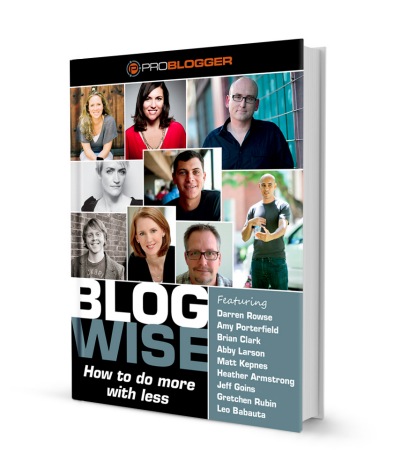
And, Darren Rowse of ProBlogger has created another fabulous resource – Blog Wise:  How to Do More with Less.  Packed with ideas for finding time to blog and including information from some of our favorite bloggers, we highly recommend this new e-book.

Tell us, what are your thoughts on Pinterest?  Or share your best photography tip or tutorial.   Or give us a suggestion for finding time to blog.   Or all three!  Happy weekending!