5 signs you need a blogging break

5 signs you need a blogging break - design by insight

Burn out.

We hear about burn out in ministry or leadership. But it can happen for bloggers as well. Let’s face it, no matter how much we do, there is still more to be done. We could write, promote, comment, link, and start over again all day, every day … and still there would be new ideas and new strategies and more work to be done.

What if we took a break BEFORE we got to the point of burnout?

[Read more…]

7 time management tips for bloggers

7 time management tips for bloggers - design by insight

Blogging well will take more time than you expect!

It’s important to understand there is much more to blogging than typing in a few words and hitting publish. As I shared in my post on leveraging your existing content, I have determined I spend at least four hours on every post I write.  This includes research, writing, editing, formatting, image development, promotion, and community building. Of course, not all of this time is in one day but it is still important to understand blogging well is a serious time investment. I have several tools I use to help manage the process. But the most important aspect of my blogging strategy is time management.

We often underestimate the time it takes to manage a great blog and the investment we will need to make to see our blogs and platform grow. That is why using our time in the most effective way possible is vital to achieving the goals we set for ourselves while we prioritize the other significant relationships and commitments in our lives.

Here are seven time management tips for bloggers. These are the main suggestions I offer to all of my coaching clients as they learn to navigate the blogging world.

  1. Group like tasks. This is one of those basic time management and organizational tips. But here’s the thing, it works! Here are a few of the like tasks I group as I work on my blog — brainstorming post ideas, finding images and formatting them, SEO research and updating, post promotion, and draft writing.
  2. Establish your own work hours. When you establish your primary working hours, you give yourself permission to focus on the tasks at hand without feeling guilty or torn about the other things you could be doing. Whether your work hours are 5 to 7 in the morning or 9 to 11 at night or anything in between, setting specific times to work is an effective way to increase your productivity.
  3. Use a timer. I love my timer! I use it to keep myself on track when I need to get specific things done. For example, I set a timer every morning to check email. My goal is to have a zero inbox and the timer helps me with that desire. I give myself 30 minutes to deal with email and then I don’t look at it again until later in the afternoon when I set my timer for 15 minutes. Many of my blogging friends use timers when they are on social media to keep from getting sucked in and losing an hour needed for more important tasks.
  4. Start small. No matter if you’ve been blogging since 2004 or just started in 2014, you need to understand this: You can’t do it all! It’s better to start small and do a few things with excellence than to try to do everything and end up accomplishing nothing. It’s okay to write fewer {better} posts and not to utilize every form of social media available.
  5. Choose to focus your energy where you have the most results. We all have limited time! Use yours where you will get the best results. And don’t believe the lie you have to do what everyone else is doing. If you have a great community on Facebook or Google+ but your tweets get lost in the shuffle, it’s okay!
  6. Schedule social media. Please, please, please, if you only do one thing I’ve recommended, make it this one. Schedule your social media! Set up your posts to automatically post to Twitter, Facebook, and wherever else you can. Then use a tool like Hootsuite or Gremln to craft specific updates and schedule them. Also, remember you can schedule beyond today and tomorrow.  Go ahead and schedule a few posts over the next several months for those evergreen posts you write.
  7. Find the rhythm that works for you. We all work differently. Try different schedules and routines to figure out what works best for you. Develop a work flow that blends with the rest of your life.

Blogging takes time. A lot of time. We need to use the time we have available the very best way possible.

What are some ways you manage your blogging time?

3 things you are doing instead of writing

3 things you are doing instead of writing

I’m writing a book. I’ve got the page numbers done. Steven Wright

It’s funny. Sort of. But it also hits way too close to home for many of us. We sit down at our computers with the intention of writing next week’s blog posts or the next 2000 words of our work-in-progress … but far more often than most of us would like to admit, we’re not actually writing.

There are countless blog posts about eliminating distractions and staying focused. Believe me, I’ve read a ton of them. I know all the tips and tricks. You probably do too. The truth is, though, we have to be honest about the fact we are not writing. Then we have to admit what we’re doing instead.

Here are what I think are three of the most common things we writers are doing instead of actually writing.

social media

When you’ve got 5 minutes to fill, Twitter is a great way to fill 35 minutes.  Matt Cutts

Let’s face it, we can spend all day promoting, networking, and building our platforms through social media. But if we are never generating quality content, it won’t matter in the long run how many Twitter followers you have. Yes, social media is important. Yes, we will have to spend time using it. But our first priority needs to be creating quality content {so we have something to keep promoting}.

dreaming

A dream doesn’t become reality through magic; it takes sweat, determination, and hard work. Colin Powell

This one can become a bigger issue than social media. Some writers get so focused on what they hope to accomplish and where they want to be they never actually engage in the “sweat, determination, and hard work” necessary to reach their dreams. Yes, goals matter. Yes, dreams are great. But your writing dreams will never come to fruition if you aren’t investing in putting words on the page.

planning

Planning to write is not writing. Outlining, researching, talking to people about what you’re doing, none of that is writing. Writing is writing. E. L. Doctorow

I’ll be honest, this one is my biggest issue.  I’m a planner. I have no less than five books outlined at this very moment. I have notes for three different blog series. My editorial calendar looks amazing. I have an impressive array of lists and plans and timelines. However, if I never sit and write the chapters of those books or the posts for those series, all those plans are worth zilch. Yes, planning is important. Yes, organization can improve your efficiency. But planning to write is NOT the same thing as writing.  

Distractions abound and it’s easy to do the peripheral tasks connected to blogging and writing without ever actually writing. It happens to everyone sometimes. But we have to be proactive and intentional about not letting all of that “stuff” keep us from the real task of writing.

my best tip is accountability!

Find someone who will ask you the hard questions about how you use your writing time. I know I am going to be asked every week if I reached my writing goals. And I know I’m going to have to give an explanation if I didn’t. My writing buddy isn’t mean-spirited; quite the opposite, she’s very encouraging. But she won’t let me slide. And I deeply appreciate her commitment to helping me be a better writer.

Perhaps you need a writing buddy of your own. Mine isn’t even a writer — just a dear friend who believes in me and wants to help me reach my goals. Maybe you are part of a mastermind group or other writing group which can serve that purpose in your life. It may be scary to ask someone to serve this role, but it’s definitely worth it.

Don’t let all the distractions keep you from doing the main thing! And don’t be afraid to ask someone to encourage and support you along the way.

What do you do instead of writing?

3 simple ways to improve writing productivity

3 simple ways to improve writing productivity - design by insight

Let’s face it, writing is hard work. Even when we love it, there are times when we can sit and stare at a blank screen {or piece of paper for the old school writers like me} wondering where to start. Distractions abound. And it’s easy to have our great intentions get lost in the midst of email checking, Facebook updating, Twitter chatting, and Pinterest browsing.

Managing our writing time, especially when many of us are squeezing in those blog posts during nap times or before everyone else wakes up, can be challenging. We want to hone our craft, to become better writers.  But sometimes it is hard to be productive with the limited time we have.

I think we often set ourselves up for disaster. Instead of taking small steps toward the bigger goal, we want to leap right into a perfect writing plan. We map out a schedule that looks awesome on paper but is impossible to maintain. Today I want to offer you three simple ways to improve writing productivity.

Spend your best time doing the most important tasks.

When you only have an hour, use it well! The most important thing isn’t promoting your posts — it’s writing them! Spend time researching, writing, editing, and rewriting. Be sure to prioritize, especially when you have limited time.  I try to keep a list of lower priority tasks I can do as I have a few free minutes throughout the day.

Take regular breaks.

Give yourself permission not to write a new post every day. Experiment to figure out how many posts you can write per week. You should also feel free to take regular blogging breaks. Many bloggers take time off during summer or through Christmas.

Group like tasks.

My least favorite part of blogging is finding images. It takes me forever. I have learned, though, to search for images for several posts at once. I use my editorial calendar to determine what types of images I will need. I gather my images for several, add the text, and format them all at once. Other bloggers do as much social media at one time as they can. Many set aside a specific time each week to write all their posts.

Using your time wisely is a vital factor for success in writing and in life. I hope these tips can help you improve how you use your writing time.

What other tips do you have for improving writing productivity?

how often should I post on my blog?

how often should I post on my blog? - design by insightDo you ever feel like just when you understand how blogging works and start to feel confident, everything changes? Yeah, me too. Between Facebook’s ever-changing algorithms, Google updates, and the ongoing introduction of new social media avenues, this business of blogging is much more complicated than it was when I started my first blog on MySpace in 2004. {Yes, that is the truth.}

In the past year, I’ve written a few times about blog strategy covering topics such as developing and using editorial calendars, building a strong call to action, improving your about page, and creating a great blog series. Today, we’ll be considering another vital component to an effective blog strategy:

How often should I post on my blog?

As with most blogging-related issues, there is no one right answer. However, there are several factors to consider as you develop your posting schedule. 

Quality content

The primary consideration is developing excellent content: How long does it take you to write a great post? Not a perfect post but one with meaningful content relevant to your audience. The answer to this question will likely vary depending on the type of posts you write, some may come together more quickly than others. Posts I write for the Design by Insight blog typically take me two hours to research, compose, edit, and format {including identifying and building SEO}. I do not develop the images for these posts, Erin does. On my personal blog, posts typically take me between an hour a half and three hours to research, compose, edit, format, and create an image.

Because of the time it takes me to write a quality post, I typically post two or three times a week on my blog. When I do a series, like the one I am writing now, I begin writing posts ahead of time and allocate chunks of time to do multiple images at once.

Be realistic with yourself about the time it takes you to write a great post, in fact, estimate high.  Don’t settle for more mediocre posts — the best strategy is creating less but better content.

Post Promotion

Another major issue in determining how often you post is the time it takes to promote your posts. Promotion is a fact of life for most bloggers and even more so for blogs connected to businesses and non-profits. Most of us don’t sit down and figure out how much time it takes to promote our posts. I never had until I started thinking about writing this post.

For the past two weeks I have been keeping track of how much time I spend promoting my posts on my personal blog. And, before I go any further, I should admit I am not a huge self-marketer and probably spend far less time on promotion than most other bloggers.  That said, I spent about 45 minutes per post on promotion over the course of day of publication and the three days following.

My posts automatically go to Twitter and I typically do not spend any additional time promoting there. I schedule the post for Facebook page, including uploading the image, at the time I schedule it for publication.  I also share the posts on my personal Facebook profile {even more important now that Facebook has changed the algorithms AGAIN and even fewer people see what you post on your page}. In addition, I pin my post the day it releases on whatever board it best fits. Then over the next three or four days, I pin it to a board just for my blog posts and any other shared boards where it is appropriate.

Because Facebook and Pinterest have been my top referral sources for the past 17 months, I invest the majority of my time promoting there. I make sure to like or comment when anyone shares my posts on Facebook and when people pin them as well.

The strategy we use for Design by Insight focuses on Twitter and Pinterest. Erin manages the social media for DBI and she manually shares our posts on Twitter as well as pinning the images on Pinterest.  We’ve found Twitter and Pinterest to be the best social media referral sources for DBI and actually have quit posting to Facebook altogether.

I offer both those examples to show you there is no “one size fits all” strategy. You will need to spend some time developing a promotion plan. It may take you a few weeks to sort out exactly the best plan for you and how it will work; but, knowing how much time you need to spend on promotion needs to be an important part of the determination for how often you will post.

Community Interaction

Responding to comments on your blog posts, responding when people share your post, and interacting with your community on Facebook or Twitter or Google+ take time. It is important to consider this time investment when you are deciding how often you will post on your blog.  This factor, more than any other, is why I landed on two to three posts per week on my personal blog. I like being able to respond to comments and interact with my community. In order to do so, I knew I needed to write less and devote more time to interacting.

Other Considerations

While the three factors I have listed above are the biggest, there are other areas of consideration when you are evaluating how many often you should post on your blog.  Some of these include:

  • Other writing obligations. In addition to my personal blog and writing for Design by Insight, I also write a weekly column for our local newspaper and contribute monthly to three websites. It is important to keep in mind the time it will take you to complete your other obligations when you are developing your posting strategy.
  • Personal commitments. Let’s be honest, I doubt anyone reading has the freedom to just write. We have other responsibilities and commitments in our lives as well … and those take time.
  • Time management. How you use the time you have is a huge factor in how much you can write. Learning to allocate your time effectively is absolutely necessary to creating great content while building a full life offline as well.

This certainly isn’t an exhaustive list, but it is a good start for those who are trying to figure out the best answer to how often to post.

How often do you post on your blog? 

make 2014 your best blogging year yet: social media tips

make 2014 your best bloggin year yet: social media tips - design by insightWell, here we are — 2014. Is it just me, or did 2013 fly by?
Hopefully you have begun to recover from the holiday madness and are now ready to plunge into all the new year holds.  A couple of weeks ago I shared some tips for planning ahead in order to make 2014 your best blogging year yet. If you haven’t had an opportunity to look at that post or to implement any of those ideas, I do hope you will take time to consider how developing a plan can be the best investment you make for your blog in the coming year.

This week, we’re talking social media. As a social media coach for individuals and small businesses, I know how overwhelming it can all seem. Long gone are the days when Twitter and Facebook were the only options. There are more than 200 different social media applications, and trying to figure out which ones to use and how to use them can send even the most savvy among us into a frenzy.

First off, let me share what I tell every one of my clients: You don’t have to do it all! Everyone take a deep breath of relief. The reality is, you can’t do it all. So give yourself the freedom not to try.

Now that we have that cleared up, here are a few tips for getting your social media plan developed and under control as the year begins.

Identify Your Priorities and Goals

You have to know what you want to do in order to determine your best social media investment. For example, if you are an author with a book releasing this year, your goal may be to have your book used by book clubs. In that case, Riffle or Goodreads may be a better use of your time. Take some time to figure out which social media platforms will be most useful to accomplishing your goals.

Update Your Profile Information

Once you have determined where you will invest in social media, make sure your profiles are up-to-date. I highly recommend using the same profile picture and username across all social media if at all possible. Not only does it help with branding but it also makes it easy for your followers to find you.  You may also want to consider creating a specific landing page for the different platforms on your site.

Check Your Links

Look at the social media links on your blog or website. Double check to make sure they are all correct. While you are there, make sure you have icons and links to the social media sites you are prioritizing.  And be sure you have a social media plugin installed to allow readers to share your blog posts or pages via social media.

Establish a Schedule

Don’t let social media run your time! Develop a posting schedule and use an app like HootSuite or Buffer to schedule your posts. While you will also want to invest time in conversation and community on social media, using a scheduler can take the pressure off you to make sure your posts are shared. In addition, it is wise to set time aside for social media each day.  Many bloggers spend 15 minutes twice a day on social media. Build that time into your daily routine and set a reasonable limit for yourself.

The key to social media effectiveness is two-fold: engage your community and share meaningful content. Don’t neglect either aspect!

What is your best social media tip?

do one thing

do one thing - designbyinsight.net

Is your life crazy? Somehow, we’re halfway through August and school starts here on Monday and I’ve looked back at the goals I set for 2013 and realized very few have been touched, even fewer met.  {Breathe, Teri Lynne, breathe.}

Life gets away from us sometimes, doesn’t it? In the midst of all our good intentions and well-laid plans plop sickness or broken blogs or even fun things like trips to the beach or movie matinees. All of those plans we had for our writing and for our blogs, those things we listed in January, they now seem almost to mock us in their incompleteness.

Can I tell you something?

It’s okay.

Really.  I promise. So you didn’t get the book proposal done yet and you haven’t figured out how to set up your email newsletter. It’s okay. 2013 is not yet over … and perhaps, if you look back at those lists you made, you’ll find some of those items not even important to you anymore.

How about this, for today {and maybe even tomorrow and next day?} do one thing.

That’s right.

Do just one thing.

Earlier this week, Jeff Goins shared the The Myth of Multitasking as part of his slow down challenge. He said this,

When you try to do more, you accomplish less. When you multitask, you’re not only communicating a priority; you’re diluting your focus.

At the end of the post, he challenged readers to pick one task they needed to accomplish that day. And then do it. Maybe that’s the challenge you need to hear {read!} as well.

Choose something, even a small something, relating to one of your goals and do it. Here are a few suggestions to get you started:

  • Update the plug-ins on your blog.
  • Rework your about page.
  • Map out your editorial calendar for the next two weeks.
  • Swap out affiliate links or make sure the ones you have are current.
  • Develop the elevator pitch for your blog or work-in-progress.
  • Clean up your sidebar.  {Read this great post from Social Media Today before you do!}

What one thing will you do today?

blog strategy: managing your time well

productivity - designbyinsight.net

Productivity. Time Management.

Focus. Intentionality.

We all desire these things … the problem is getting there.  Am I right?

As my online commitments have increased, I’ve found it more difficult to maintain the same level of content production on my personal blog as I had when it was all I did.  I currently manage the social media and develop blog content here at Design by Insight.  In addition, I am the Director of Social Media for The Whatever Girls Ministry and I am a contributing writer to five other sites.  Yeah, that’s a lot.

When I first read Paul Meyer’s words above, I had one of those a-ha moments. Perhaps you, like me, have lost sight of the important of managing your time well in order to blog more effectively. Clarity came where chaos had been ruling in my mind {and on my calendar}.  Myer offers us three keys to time management for bloggers.

Commit to Excellence

As a consultant for authors, I often tell my clients it’s better to focus on one or two areas of marketing their books and do those exceptionally than it is to spread themselves thin trying to market everywhere and landing in mediocrity.   The same is true for blogging. As you build your blog, a part of your strategy must be a commitment to excellence.  Make intentional decisions to be exceptional and it will pay off. Choose excellence … and realize that typically will mean choosing less.

Plan Intelligently

Remember the editorial calendar?  You need one.  If you are going to manage your time well, be productive as a blogger without losing your real off-the-screen life in the process, you need a plan. Your plan gives you freedom to focus on the immediate and long-range goals for your blog.  Everyone’s plan will look different because we each have different goals.  But you need to know your goals and build a doable plan for reaching them.

Focus Your Effort

Once you have identified the goals for your blog, you need to consider all the options for achieving them.  Don’t try to do everything … instead choose a few {three, maybe} and focus on those.  Invest deep, not wide.  You don’t have to be involved in every social media avenue.  You don’t have to participate in every linky.  You don’t have to write every day.  This is your blog.  You are in control of it, not the other way around.

Learning to use our time well is a key factor in the long-term success of our blogs.  For each of us, the daily process will look different. If you like to know how other people do things, check out How They Blog.  Each week Kat interviews a blogger {some bigger, some smaller}who shares insight into his or her writing habits, offers resource recommendations, and gives social media tips.

For more insight on this topic, we recommend you check out Amy Andrews’ current series, Time Management for Bloggers.  She is digging deep into this idea and you might find her thoughts helpful as you develop your time management plan.

Tell me, what are your goals for your blog?

does your small business need a blog? {the time factor}

does your small business need a blog {the time factor}

Welcome to the fourth post in our series about blogging for small businesses. In part one, we explored two reasons WHY your business could benefit from a blog. Next, we considered the importance of creating quality content. Then we discussed how to identify your audience and tailor your blog to meet their needs. This week, we’ll look at the question I know is burning inside you:

How much time is this going to take?

The very thought of adding anything else to the already overcrowded list of responsibilities is enough to overwhelm even the most organized small business owner. The good news is, blogging doesn’t have to take a lot of time. A blog post doesn’t have to be an in-depth article with four points and a poem. Each post will probably take about an hour total, maybe less time as you get used to doing it.

Wondering about how to create quick content?  In the post on creating quality content, we discussed several ways to brainstorm ideas. Here are just a few more ideas for creating quick and useful content.

  1. Use images to tell the story. If you are a boutique owner, share a photo of your latest arrivals and a quick tip about styling them.
  2. Build a resource elsewhere and link to it. For example, a hair salon might want to do a quick post about summer hair care and then link to their Pinterest board with different summer styles.
  3. Answer a question. Think about the common questions you get asked and answer one in every blog post. A landscaper might want to create a list of shade-loving plants.
  4. Offer ideas to your customers. A coffee shop could do an, “If you like this drink, you might also like this one” type post.
  5. Spotlight your employees or even your top customers. People connect with people!

Each of these ideas could easily be completed in an hour. Remember, your blog posts don’t have to be newspaper or magazine articles.  People like brevity and they are more likely to share concise and useful content.

When should I blog?

Most small business owners don’t have time to spend hours developing content and editing blog posts. You’re a busy bunch of people! For most small businesses a weekly blog is more than sufficient. In fact, for many a twice-monthly posting schedule is ideal. The key is consistency. It’s better to start blogging once every other Friday and then build up to every Friday as you get into a system than it is to start like gangbusters and then fall off into oblivion.

With my clients I always suggest the following:

  • Don’t post the first blog until you have at least 3 more posts ready to go. Give yourself room to breathe.
  • Develop a system or a rotation for your posts. For example, if you are going to do weekly posts create a rotation like tips, lists, questions, and spotlight. That way you know what you need to write and it doesn’t feel so overwhelming.
  • Build an editorial calendar based on the cycle of your business. This will also help you brainstorm post ideas.  Consider what information your customers need based on seasons, holidays, etc., and tailor your blog posts to meet their needs.

The bottom line is this:  You control your blog, it doesn’t control you!  It’s always better to do less well than more halfway.  

How could developing a editorial calendar help you plan your blog posts?

4 tips for improving productivity

4 tips for improving productivity - design by insight

Productivity:  the quality, state, or fact of being able to generate, create, enhance, or bring forth goods and services

Let’s face it, as bloggers and writers we all deal with writer’s block.  Periodically, we all find ourselves weary and in need of inspiration.  Imp Since the beginning of the year I’ve been evaluating how I use my time and considering the systems I use to accomplish my daily tasks.  I’ve gathered a few articles about productivity that might help some of you as well.

Use the best tools.  TechTrick World offers a list of great tools for improving productivity as a blogger.  Topping the list is Evernote.  I’ve been studying up to learn how to best use this app on my iPhone and iPad to collect and curate ideas for all the projects I have going.

Develop a routine.  This is my favorite suggestion from 10 Laws of Productivity on 99U. Other useful ideas include “Practice saying ‘No!'” and “Start small.”

Make productivity a habit.  Leo on ZenHabits has a fabulous post, Sticking to a Habit: The Definitive Guide.  I highly recommend reading this whole article.  As we build better habits, we find ourselves living more productive lives.

Learn from others. LifeHacker has a great series called How I Work.  Sometimes we can find great ideas for improving our own productivity by finding out more about how others work well.  {Thanks Amy for sharing about this series on your blog!}

Productivity is never an accident. It is always the result of a commitment to excellent, intelligent planning, and focused effort.

~ Paul J. Meyer

What’s your favorite productivity tip?

pinterest, photography, and problogger

Have you read all the posts lately about Pinterest?  There is a growing concern about the legality of many uses of Pinterest.  Amy Andrews has written an excellent summary of several of these posts and shares the changes she is making regarding pinning.  {Check out Erin’s color and typography boards and I’ve got a social media board.}

We know how much bloggers love great images and with all these concerns about copyright and fair usage, many of us are getting serious about learning to use our DSLRs and even our iPhones to create the photos we use on our blogs.   Michelle is one of our bloggy friends and she is also a great photographer.  This week she shared some tips for using Instagram.

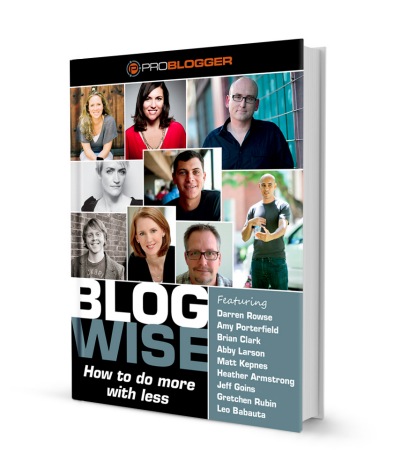
And, Darren Rowse of ProBlogger has created another fabulous resource – Blog Wise:  How to Do More with Less.  Packed with ideas for finding time to blog and including information from some of our favorite bloggers, we highly recommend this new e-book.

Tell us, what are your thoughts on Pinterest?  Or share your best photography tip or tutorial.   Or give us a suggestion for finding time to blog.   Or all three!  Happy weekending!